


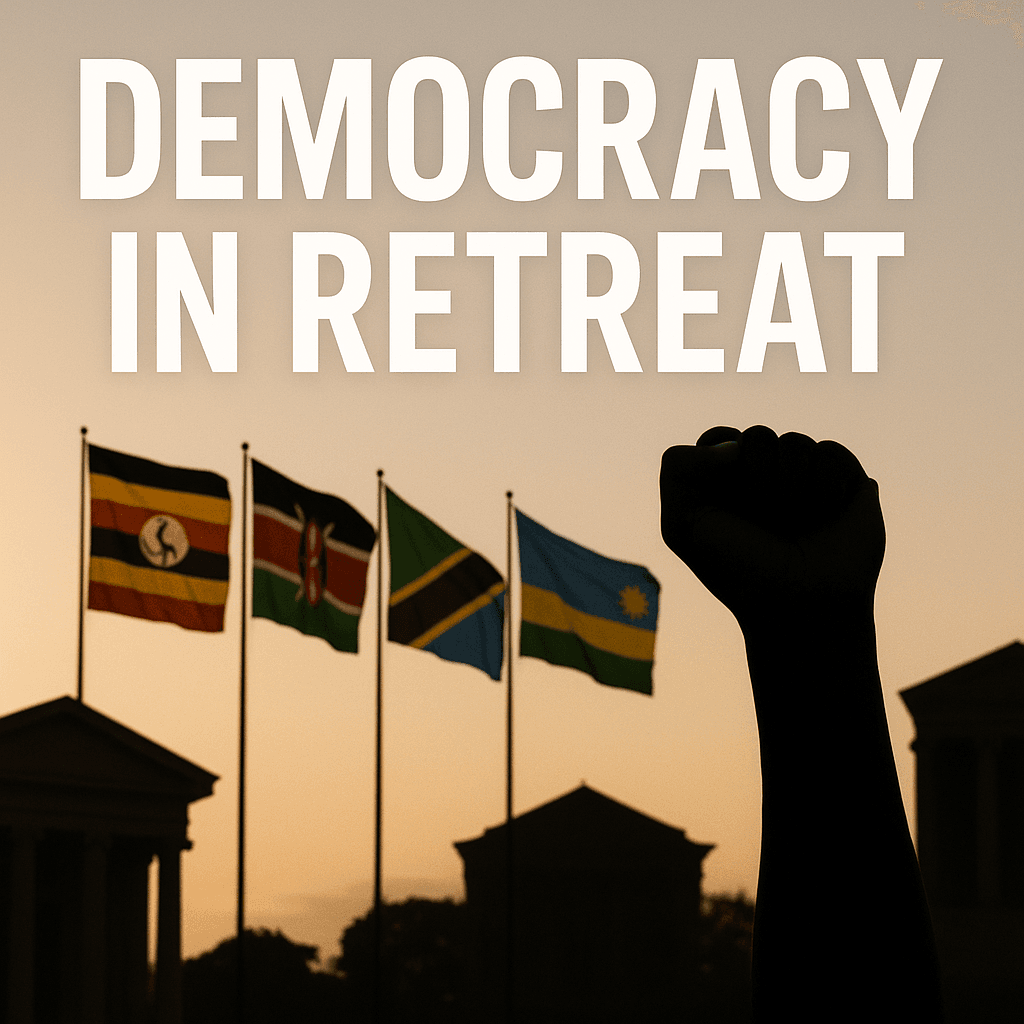
The arrests. The torture. The treason charges. What we’re witnessing across East Africa isn’t just a regional crackdown — it’s the calculated dismantling of democracy itself. From Uganda to Tanzania, Kenya to Rwanda, and yes, even Ethiopia, the very systems meant to protect the people are being weaponized against them. But amid the silence of captured parliaments and the violence of captured states, a new power is rising — and it starts from the ground up.
Last week’s shocking news of Ugandan lawyer and journalist Agather Atuhaire being detained in Tanzania and dumped at the border in the middle of the night sent a chill across the region. Her colleague, Kenyan activist Boniface Mwangi, showed signs of physical abuse after his own release. Both had entered Tanzania to show solidarity with opposition figure Tundu Lissu — and both paid a brutal price.
Lissu, a former presidential candidate and prominent opposition leader, is now facing multiple charges including treason, all for allegedly making provocative comments at a political rally. But what’s truly provocative isn’t what Lissu said — it’s the state’s response. The message is loud and clear: dissent will be punished, solidarity will be criminalized, and democracy will be gutted under the banner of “national security.”
And Tanzania is not alone. In Uganda, Kizza Besigye — who has spent decades opposing the Museveni regime — is facing similar charges, echoing the same dark logic: to challenge power is to betray the nation. In Kenya, last year’s anti-finance bill protests turned deadly, with more than 80 people killed and a wave of abductions reported in the aftermath. President William Ruto denies it. But families are still searching for missing sons and daughters.
The region is spiraling. In Burundi, police brutality has become part of everyday life. In Rwanda, political opponents of President Paul Kagame either land in jail or mysteriously disappear. In the Democratic Republic of Congo, war and political dysfunction make democratic discourse nearly impossible.
And now, even in Ethiopia, the strain is starting to show — not just in political spaces, but in the very fabric of daily life. In recent weeks, doctors across the country have gone on strike, not out of politics, but out of pure desperation. Their salaries, they say, are no longer enough to pay for shelter, internet, or even food. These are the very professionals trained to save lives, now left begging to survive. If this is the condition of the educated middle class, what hope is there for ordinary citizens?
This is not the story East Africa was supposed to write in the 21st century.
So what happened?
The mistake, as political analyst and author Nanjala Nyabola writes, was to equate the ritual of elections with the reality of democracy. Leaders, parties, and even foreign donors convinced themselves that if people were voting, democracy must be working. But the ballot box became a mask, hiding the rot beneath. And the people were slowly convinced that standing in line every five years was enough.
But democracy doesn’t die in a single coup. It dies in a hundred small compromises. It dies when parliaments stop challenging the executive. When political parties become personality cults. When activists are tortured and dumped at borders. When women are denied candidacy unless they bend the knee to political kingpins. When youth protest and are met with bullets instead of ballots. When doctors, the supposed elite of society, must strike just to feed their families.
Real democracy demands more than votes. It demands vigilance. It demands accountability. And above all, it demands courage.
The truth is, East Africa never fully decentralized power. Executive branches still rule with near-total authority, while legislatures beg for scraps. In Tanzania, critics are silenced with arrests and disappearances. In Uganda, MPs are rewarded with luxury cars and loans for their loyalty. In Kenya, opposition figures like Edwin Sifuna who once defended protesters now fall silent — because their party bosses have struck deals with the government.
The result is a politics of puppetry, not participation. A parliament of actors reading scripts written by the presidency. And the audience — the people — are beginning to walk out.
What makes this crisis even more dangerous is the role of the security services. In most East African nations, the police, military, and intelligence agencies answer not to the constitution, but to the ruling elite. There is no buffer, no check, no brake on repression. When the state decides to punish its critics, there are few legal tools left to resist.
So where does hope come from?
From the same place it always does: the people.
Democracy doesn’t only live in parliament buildings or presidential palaces. It lives in classrooms. In trade unions. In farmers’ cooperatives. In neighborhood associations. In church groups and sports clubs. It lives anywhere people organize and demand a say in how things are run. That is where the rebuilding must begin.
When we engage in democratic practice every day — not just once every five years — we create leaders who are accountable to us. We build civic institutions that are resilient, responsive, and rooted in reality. Elections then become a natural culmination of civic life — not a theatrical event controlled by billionaires and strongmen.
It won’t be easy. People are tired. They are poor. They are scared. And they have every reason to be. But surrendering only guarantees that things get worse. Organizing — even in small, local ways — is the only way out.
The region’s politicians must also wake up. Their job is not to survive politically. Their job is to serve. To uphold the constitutions that give them legitimacy. To check the excesses of presidents and prevent the consolidation of autocracy. Anything less is betrayal.
There are no shortcuts. No magical leaders. No saviors coming from abroad. The work of democracy — the hard, messy, frustrating work — must be done by us.
Tajudeen Abdul-Raheem, the late Nigerian scholar and activist, said it best: “Don’t agonize. Organize.”
That message should echo in every town and city in East Africa today.
The region is at a crossroads. The choice is clear. Surrender democracy to the hands of elites — or seize it back, one village, one school board, one protest at a time.
Because if we don’t fight for democracy now, we may not get another chance.