


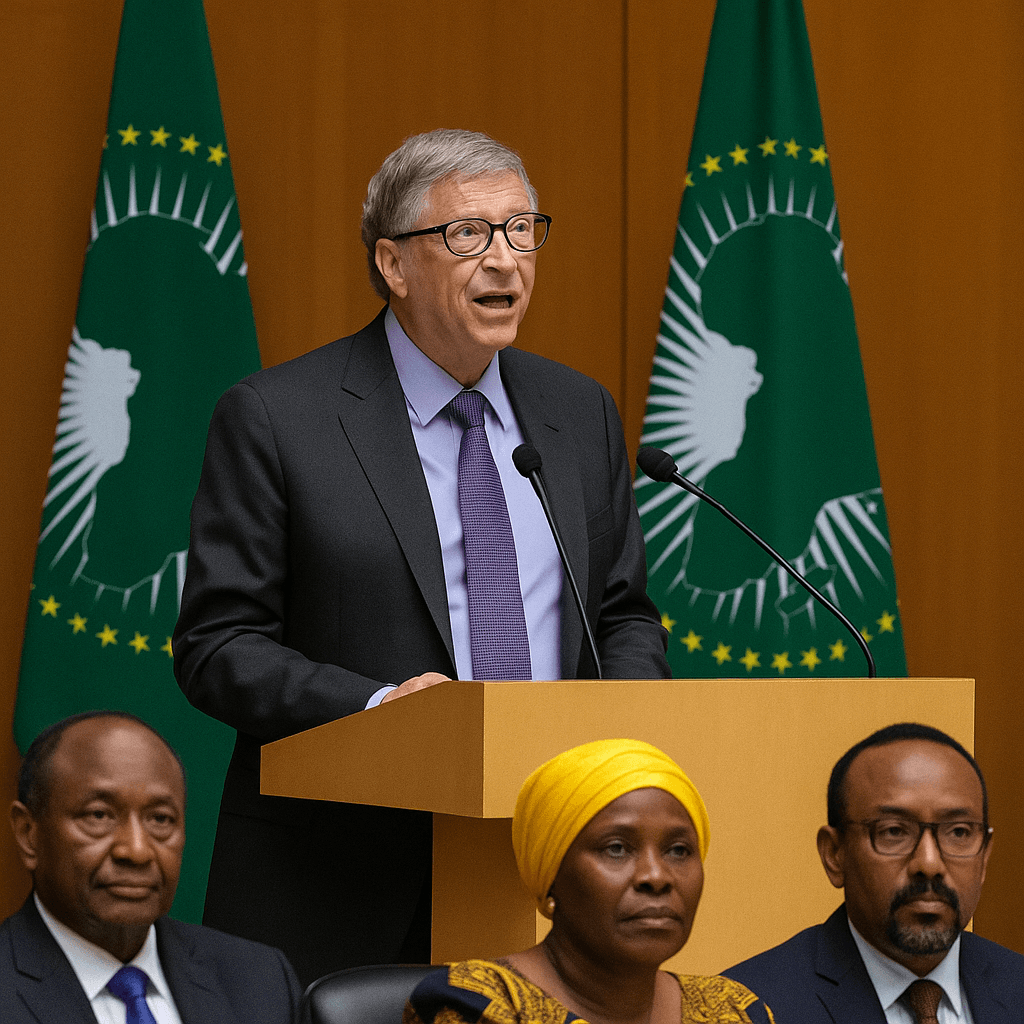
ADDIS ABABA – On June 2, inside the iconic Nelson Mandela Hall at the African Union headquarters in Addis Ababa, Ethiopia, one of the world’s most influential philanthropists made a historic pledge. Bill Gates announced that a significant portion of his nearly $200 billion fortune will be devoted to strengthening Africa’s health and education systems over the next two decades.
The announcement, made before a high-level audience of African leaders and dignitaries, was met with standing ovations. Gates confirmed that this initiative is part of a broader commitment he made in May: to donate nearly all of his wealth before the Gates Foundation permanently closes on December 31, 2045.
Former First Lady of Mozambique and humanitarian advocate, Graca Machel, welcomed the commitment, calling it “a transformative step in Africa’s journey forward.” She emphasized that strategic partnerships like this are vital in unlocking the continent’s vast potential.
Two Decades of Ground-Level Impact
The Bill & Melinda Gates Foundation has been a key player in Africa’s development efforts for more than 20 years. From health systems and vaccines to financial inclusion and agriculture, the foundation has operated in countries like Ethiopia, Kenya, Nigeria, Senegal, Burkina Faso, and South Africa.
Its agricultural work alone accounts for over $6 billion in funding, supporting smallholder farmers, enhancing food security, and improving productivity through access to better tools, seeds, and sustainable farming practices.
In healthcare, the foundation has helped expand vaccine access, reduce child mortality, and combat diseases such as malaria and polio. The foundation has also funded water and sanitation programs, supported maternal health, and promoted gender equality.
The Power of Philanthropy in Regional Transformation
This renewed pledge signals a long-term vision: not just charity, but deep and sustainable collaboration. Gates emphasized that the next 20 years will focus on partnering with local governments, organizations, and innovators to build systems that are resilient and locally driven.
His approach is anchored in supporting evidence-based solutions and inclusive growth — empowering African experts, farmers, teachers, and doctors to lead the change from within. Through targeted investments and partnerships, the goal is to create long-lasting institutions that elevate communities across the Horn of Africa.
The Foundation has already been instrumental in Ethiopia’s agricultural development and health reform initiatives. In recognition of this long-standing collaboration, Prime Minister Abiy Ahmed presented Gates with the Grand Order of Merit of Ethiopia on June 1 — the country’s highest civilian honor.
Why This Matters Now
Africa is at a critical moment. From climate shocks to public health challenges, regional instability to economic inequality — the continent faces significant hurdles. But it also holds the youngest and fastest-growing population on Earth, abundant resources, and untapped innovation.
Gates’s commitment comes at a time when African nations are increasingly focused on self-reliance and interconnectivity. It also coincides with global calls for renewed North–South partnerships that emphasize mutual respect and shared responsibility.
In this context, Gates’s multi-billion-dollar pledge is not just about money — it is a powerful gesture of solidarity.
Ethiopia and the Horn: Strategic Priorities
For Ethiopia, the announcement is particularly significant. As one of the Foundation’s key partners, the country has already benefited from programs aimed at expanding rural healthcare, boosting agricultural productivity, and increasing educational access.
The Ethiopian government has expressed strong support for further collaboration, with officials citing the Foundation’s contributions as key drivers of reform and innovation in recent years.
Beyond Ethiopia, the broader Horn of Africa — including Kenya, Somalia, Djibouti, Eritrea, and Somaliland — stands to benefit from regional investment models that prioritize integration, research, and locally-led development. Gates’s foundation has often promoted cross-border strategies that enhance shared infrastructure, food systems, and healthcare networks.
A Path Forward: Supporting African Leadership
While the philanthropic world has often been criticized for top-down approaches, Gates has repeatedly stressed that the future of African development lies in African leadership. His foundation aims to serve as a catalyst, not a commander — providing resources and expertise while deferring to local institutions and community priorities.
This perspective has been well received by many African leaders and experts who view strategic philanthropy as a vital supplement to national reform agendas and the African Union’s long-term goals.
Gates’s focus on long-term outcomes, transparent partnerships, and sustainability is aligned with the African Union’s Agenda 2063 — a blueprint for a prosperous and peaceful continent driven by its own citizens.
A Call to Collaborate — Not Depend
As Africa prepares for a future defined by innovation, education, and opportunity, partnerships like this will play a critical role. Gates’s announcement serves as both a challenge and an invitation — to work together toward shared progress, without compromising sovereignty or accountability.
Ultimately, Africa’s success will depend on its people, its leaders, and its commitment to self-determined growth. Strategic support — when paired with strong local vision — can help unlock a future where every child, no matter where they are born, has the opportunity to thrive.
This Is a Turning Point
The Horn of Africa is not a passive recipient of global charity — it is a region ready to lead. With the right partnerships, and with investment grounded in trust and respect, a new chapter is possible.
Bill Gates’s commitment is monumental. But the real story is still being written — in the classrooms, clinics, and communities across East Africa. The work ahead is not only about donations. It is about dignity, collaboration, and progress.