


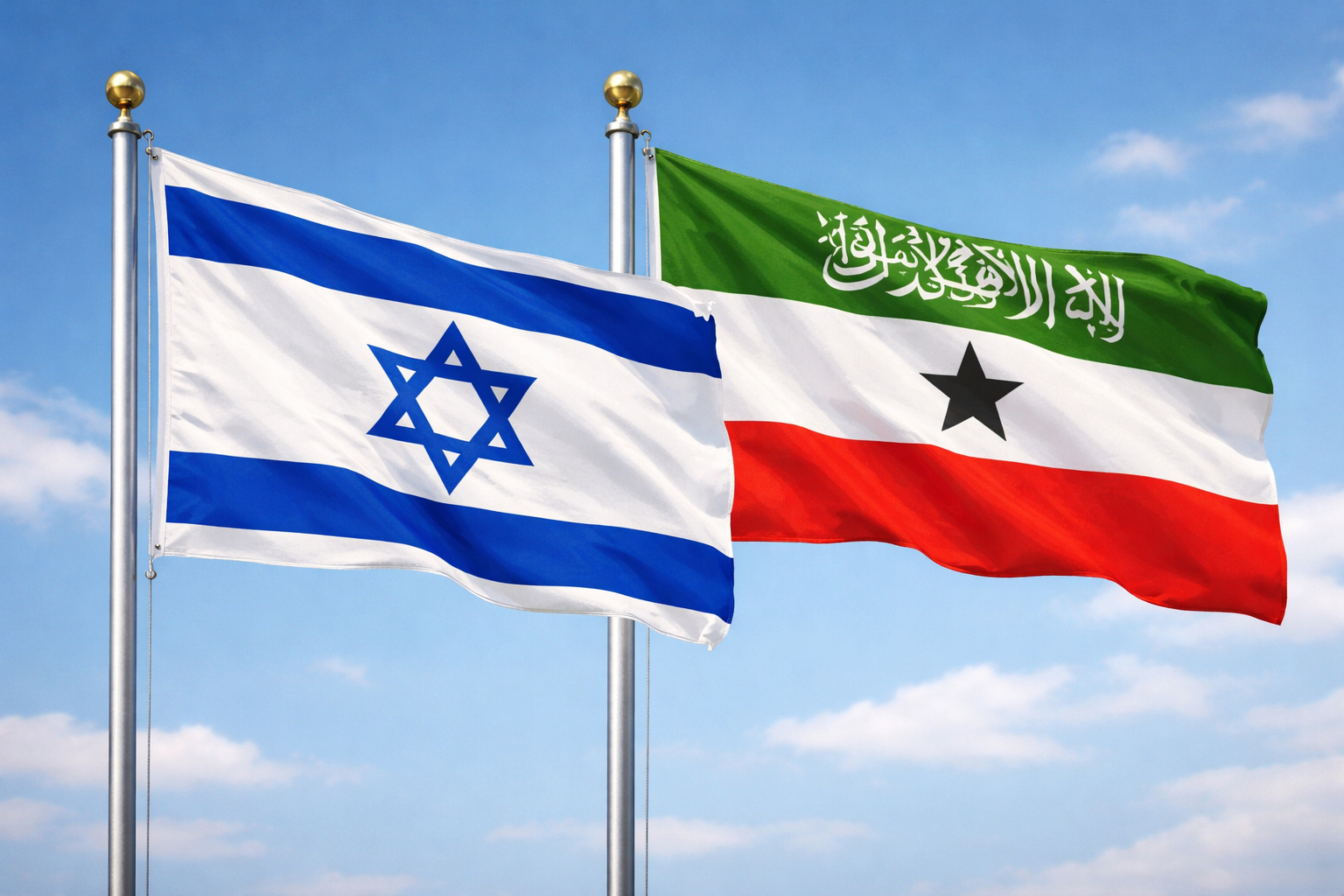
Israel has officially recognized Somaliland as an independent and sovereign state, becoming the first United Nations member country to do so since Somaliland declared independence from Somalia in 1991. The announcement was made by Israeli Prime Minister Benjamin Netanyahu, marking a significant diplomatic development in the Horn of Africa.
According to Israeli officials, the recognition was formalized through a joint declaration establishing full diplomatic relations between Israel and Somaliland. The agreement opens the way for cooperation in areas including security, agriculture, health services, technology, and trade. An official visit by Somaliland’s president, Abdirahman Mohamed Abdullahi, to Israel is expected in the coming period.
Somaliland has operated as a self-governing entity for more than three decades, maintaining its own political institutions, security forces, judicial system, and currency. The territory has held multiple elections that were widely regarded as competitive and peaceful, distinguishing it from ongoing instability in parts of the wider region. Despite these developments, Somaliland has remained without formal international recognition until now.
Israel’s decision carries regional and strategic implications. Somaliland’s location along the Gulf of Aden places it near one of the world’s most important maritime trade routes connecting the Red Sea to the Indian Ocean. Analysts note that the recognition reflects growing international interest in stability, security cooperation, and economic partnerships in the Horn of Africa.
Somalia’s federal government swiftly rejected the move, reiterating its position that Somaliland remains part of its sovereign territory. Several countries aligned with Somalia’s territorial integrity expressed concern, while reactions within Somaliland were largely celebratory, with officials and residents describing the announcement as a long-awaited acknowledgment of political reality.
Diplomatic observers say Israel’s recognition could influence broader international discussions on Somaliland’s status, though it remains unclear whether other states will follow suit in the near term. For now, Israel’s decision represents a breakthrough moment for Somaliland’s international engagement and a notable shift in Horn of Africa diplomacy.
As regional dynamics continue to evolve, the recognition raises important questions about future alliances, economic partnerships, and the balance between territorial integrity and self-determination in Africa.