


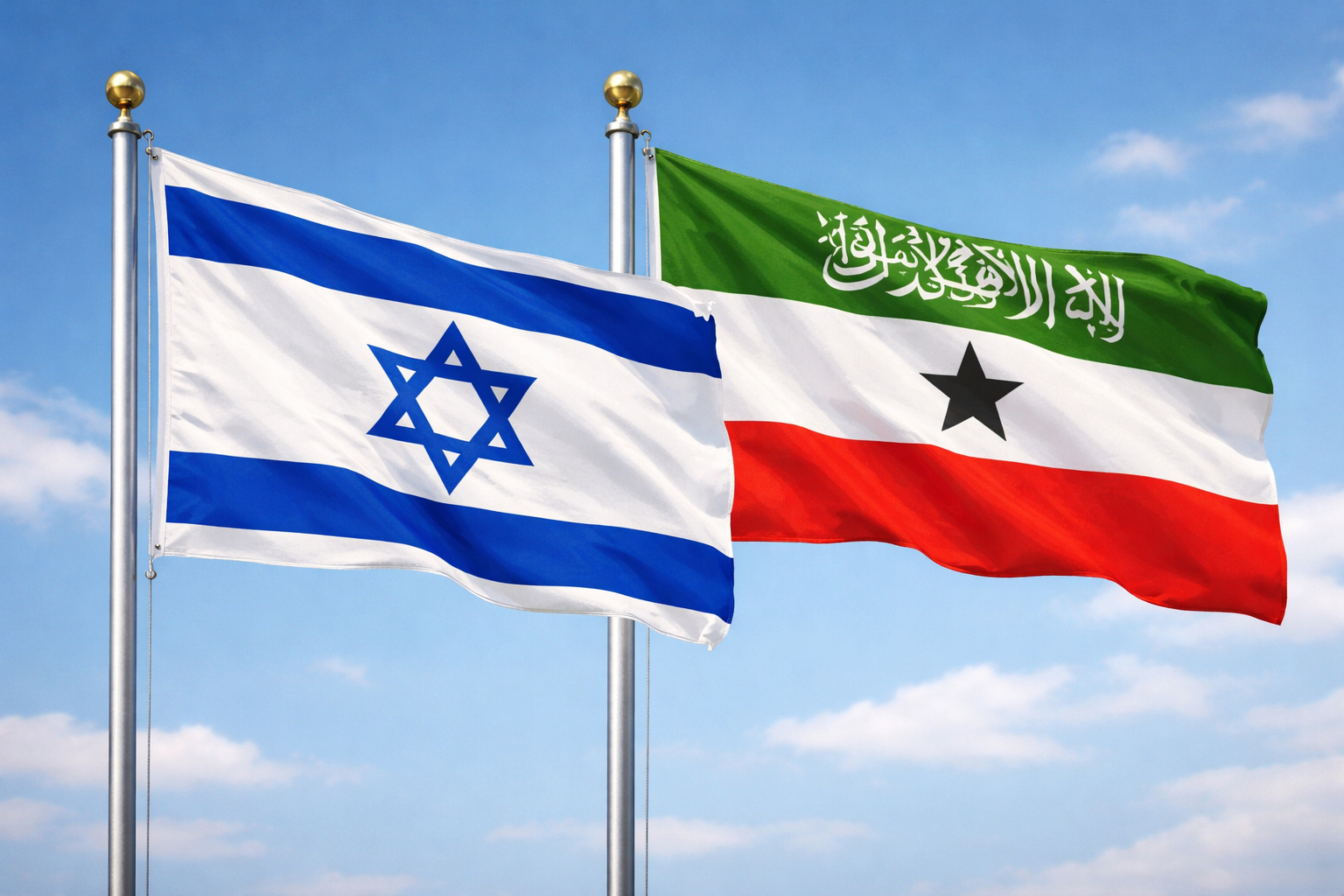
A quiet but historic diplomatic move is reshaping the political map of the Horn of Africa. Israel has formally accepted the appointment of Somaliland’s first-ever ambassador to Tel Aviv, marking another milestone in the growing relationship between the two sides. At the same time, Israel has confirmed it will soon appoint its own ambassador to Somaliland, signaling that this is not a symbolic gesture but the beginning of structured, official engagement.
The appointment of Mohamed Hagi as Somaliland’s ambassador to Israel was confirmed in a formal letter sent by Israel’s Foreign Ministry to the office of President Abdirahman Mohamed Abdullahi. Hagi, who currently serves as an adviser to the president, has long been an advocate for closer ties between Somaliland and Israel. His elevation to ambassador represents both diplomatic recognition and political validation of years of outreach.
For Somaliland, which declared independence from Somalia in 1991 and has since operated with its own government, security forces, and institutions, this development carries profound significance. For more than three decades, Hargeisa has sought formal international recognition. In December, Israel became the first country in the world to officially recognize Somaliland’s independence, breaking a long-standing international stalemate.
This latest step transforms that recognition into institutional diplomacy.
A Relationship Moving Beyond Symbolism
The acceptance of an ambassador is not a minor diplomatic courtesy. It represents acknowledgment of state-level relations. By formally receiving Mohamed Hagi as ambassador, Israel is treating Somaliland as a sovereign partner in bilateral engagement.
The Israeli Foreign Ministry has also announced that it will soon appoint its own ambassador to Somaliland. That move will establish two-way diplomatic representation, creating a direct channel for political dialogue, trade, development cooperation, and strategic coordination.
For the Horn of Africa, this is more than a bilateral story. It signals that Somaliland’s long campaign for international legitimacy is beginning to bear fruit in tangible ways.
Somaliland has maintained relative stability compared to much of the surrounding region. It has held elections, built functioning institutions, and developed working security structures despite lacking formal recognition. Supporters of its independence argue that recognition rewards stability and democratic governance rather than perpetuating uncertainty.
Israel’s decision appears to align with that logic.
Development Cooperation Already Underway
Diplomacy is not the only area where engagement is advancing. Israel’s international development agency, MASHAV, is currently hosting officials from Somaliland’s Water Authority for a professional training course in Israel.
Water management is a critical issue for the Horn of Africa, where drought cycles, climate stress, and infrastructure gaps affect millions. Training programs focused on water technology, resource management, and sustainable systems have the potential to strengthen Somaliland’s internal capacity.
Such cooperation suggests that the relationship is intended to be practical and development-oriented, not merely political.
MASHAV has a long history of providing technical training in agriculture, water systems, and infrastructure across Africa. Somaliland’s participation signals that formal diplomatic recognition is already translating into sector-level collaboration.
A Strategic Realignment in the Horn
The Horn of Africa sits at one of the world’s most strategic crossroads, near the Red Sea shipping lanes and key maritime routes linking Africa, the Middle East, and Asia. Diplomatic relationships in this region carry implications far beyond national borders.
Israel’s recognition of Somaliland in December was a bold move. By becoming the only country to officially recognize Somaliland’s independence, Israel altered the diplomatic landscape. Accepting Somaliland’s ambassador now consolidates that shift.
For Somaliland, the implications are significant. Recognition by even a single state can open doors to new partnerships, trade channels, and international visibility. It can also encourage debate within other capitals about whether longstanding non-recognition policies still serve regional stability.
Supporters of greater Horn of Africa integration argue that stability, trade, and structured cooperation should guide policy decisions. Somaliland’s functioning governance system and its willingness to engage internationally are central to that argument.
What Comes Next
The appointment of ambassadors typically marks the beginning, not the end, of deeper engagement. Areas likely to expand include development cooperation, trade discussions, technology exchange, and potential security coordination.
The Horn of Africa is in a period of transformation. Infrastructure projects, port developments, regional trade corridors, and shifting alliances are redefining economic and political relationships. Within that evolving environment, new diplomatic alignments can accelerate integration and open new economic pathways.
For Somaliland, international recognition has been the central diplomatic goal since 1991. Israel’s recognition in December and the formal exchange of ambassadors now represent the most concrete progress toward that objective in decades.
For the broader region, the question is no longer whether Somaliland can operate as a functioning state. It already does. The question now is whether more countries will follow Israel’s lead and engage directly.
The Horn of Africa stands at a crossroads shaped by diplomacy, development, and strategic calculation. As Somaliland plants its diplomatic flag in Tel Aviv and prepares to host an Israeli ambassador in Hargeisa, a new chapter begins.
Will this be the first step in a wider wave of recognition and regional realignment, or will Somaliland’s breakthrough remain an exception in a cautious international system?