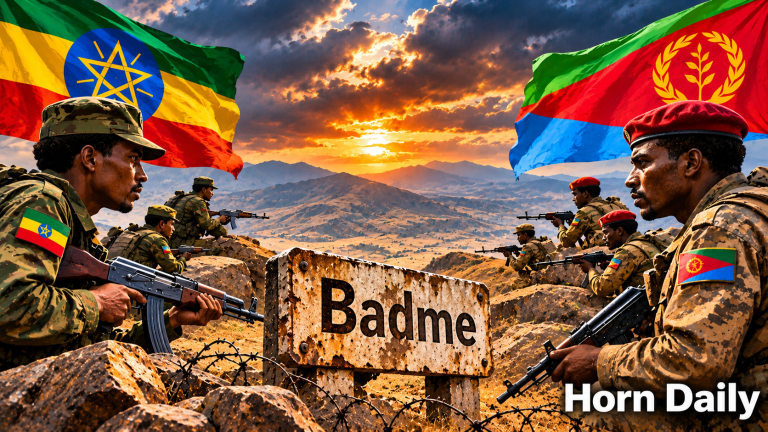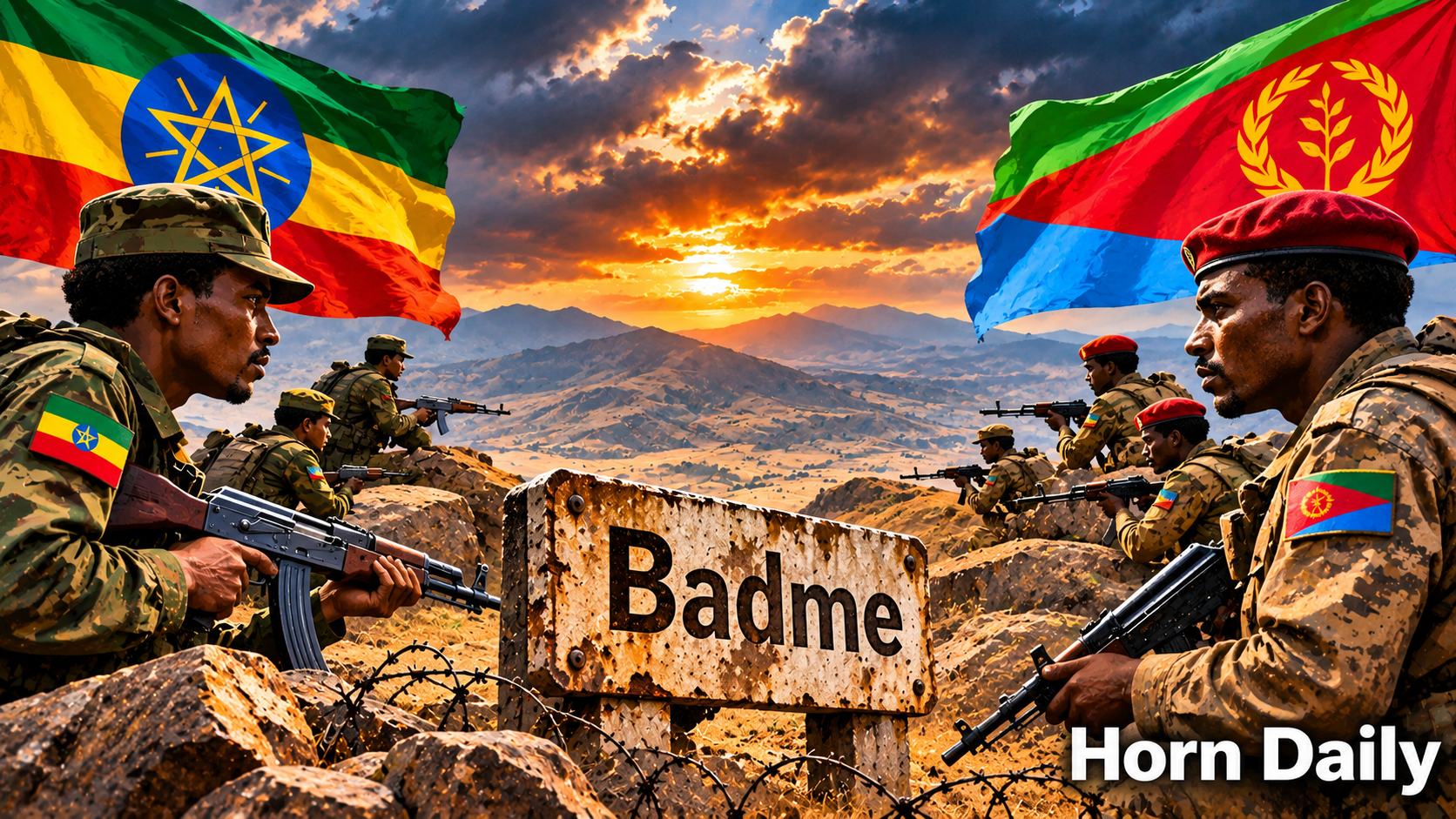
More than a quarter of a century after Badme became the symbol of a devastating border war, the small frontier town is once again at the centre of fears that Ethiopia and Eritrea could be drawn into direct confrontation. Reports of military concentrations and possible armed exchanges have raised an uncomfortable question for a region that celebrated the restoration of peace in 2018: how did two countries that once promised to build a shared future return to the edge of conflict?
In a report published on 18 November, Reuters cited conflict monitors and sources connected to rival Tigrayan factions describing a military build-up along the frontier. The Armed Conflict Location & Event Data organisation (ACLED) reported exchanges near Badme, although Reuters could not independently establish whether the two national armies had engaged directly. Sources connected to opposing factions in Tigray offered conflicting accounts.
The distinction matters. A renewed interstate war is not an established fact, but the possibility of one is serious enough to demand attention. With fighting in northern Ethiopia, mutual accusations of interference and disagreements over maritime access, the conditions for a dangerous escalation are present. For communities that have already experienced repeated displacement and economic disruption, the prospect of another conflict is particularly alarming.
Badme and the unfinished legacy of the border war
To understand why reports from Badme carry such weight, it is necessary to return to the conflict that erupted in 1998. Ethiopia and Eritrea, whose relationship had been transformed by Eritrean independence in 1993, fought a costly war over their frontier. Badme became the most recognisable symbol of a dispute that claimed tens of thousands of lives and left deep scars on both societies.
The 2000 Algiers Agreement established a framework for ending the fighting and determining the boundary. An international boundary commission subsequently awarded Badme to Eritrea. Yet the ruling did not immediately produce normal relations, and the frontier remained a source of confrontation for years. The consequences extended far beyond territorial questions: families were separated, commercial relationships disappeared and opportunities for cross-border development were lost.
In 2018, Ethiopian Prime Minister Abiy Ahmed and Eritrean President Isaias Afwerki announced a historic reconciliation. The breakthrough offered a vision of a different Horn of Africa, one in which the movement of people, goods and investment might replace the logic of military confrontation. The optimism was understandable, but the restoration of diplomatic relations did not resolve every underlying political and security disagreement.
Today, Badme has again become a focal point of international concern. Its significance is not measured by the size of the town or its economic output. It lies in the history attached to it and the possibility that renewed violence there could undermine relations between two neighbouring states for another generation.
Tigray becomes the centre of a dangerous regional crisis
The present tensions cannot be separated from developments inside Ethiopia. According to the Reuters report, renewed fighting between federal forces and Tigrayan rebels began in September. The proximity of that conflict to Eritrea has increased the possibility that an internal Ethiopian confrontation could acquire an international dimension.
Witnesses and Ethiopian authorities have alleged that Eritrean forces entered Tigray in October to assist rebels. Eritrea denies the allegation and argues that Ethiopia is attempting to manufacture grounds for aggression. Addis Ababa has also accused Egypt and Sudan of supporting the rebels, allegations that both countries reject.
ACLED’s account of possible direct exchanges near Badme adds to these concerns, but conflicting testimony means that the precise nature and extent of the confrontation remain uncertain. International Crisis Group analyst Magnus Taylor warned Reuters that fighting close to the frontier could draw Eritrea further into the conflict. That warning should be understood as an assessment of risk rather than confirmation that a wider war has already begun.
The reversal in relations is striking because Ethiopian and Eritrean forces fought on the same side during the 2020–2022 Tigray war. Their subsequent deterioration illustrates how military partnerships formed around immediate security objectives do not necessarily produce durable political settlements. The interests of Tigrayan communities, meanwhile, cannot be reduced to the competing calculations of governments and armed factions.
Any credible effort to prevent an interstate conflict must therefore address the crisis within Tigray as well as relations between Addis Ababa and Asmara. Humanitarian access, civilian protection and meaningful political dialogue are essential elements of such an effort. A settlement that ignores the population most directly affected risks leaving the foundations of the next confrontation intact.
The Red Sea question complicates the search for peace
Beyond the immediate frontier crisis lies a broader disagreement over Ethiopia’s access to maritime trade. Since Eritrean independence, Ethiopia has been landlocked. Its growing economy depends on transport corridors through neighbouring countries, making reliable and affordable access to ports a major development concern.
Abiy Ahmed has repeatedly presented maritime access as an important national objective and has said that Ethiopia seeks to achieve it peacefully. Eritrean authorities, however, have interpreted some of the rhetoric surrounding the issue as a potential threat to their country’s sovereignty. The difference between these positions is central to understanding the diplomatic challenge.
Commercial access to the sea and territorial sovereignty need not be incompatible. Long-term port agreements, transit guarantees, customs cooperation and infrastructure investment can provide landlocked countries with dependable trading arrangements while preserving the sovereignty of coastal states. Such arrangements require trust, predictable rules and credible commitments from all parties.
Djibouti’s role as a gateway for Ethiopian commerce demonstrates the economic importance of cross-border infrastructure. Somaliland’s Berbera port also illustrates the potential for additional regional trade corridors, although Somaliland’s claim to independence and Somalia’s opposing sovereignty position remain politically contested. Eritrea’s ports at Assab and Massawa could likewise form part of a more interconnected regional economy if mutually acceptable agreements were reached.
None of these opportunities requires a military solution. Indeed, a confrontation between Ethiopia and Eritrea could make maritime diversification more difficult by discouraging investment and increasing uncertainty across the region. The economic interests of coastal and landlocked societies are not inherently opposed, but turning those interests into practical cooperation requires diplomacy rather than assumptions about entitlement or hostile intent.
A regional crisis that cannot be contained by borders
Another war would have implications well beyond Badme. Sudan’s ongoing civil war already places enormous pressure on neighbouring countries. Djibouti, Somalia and Somaliland have their own security and development priorities, while international partners have substantial interests in the stability of Red Sea commerce. A new conflict could complicate humanitarian operations, disrupt trade planning and redirect scarce public resources away from development.
The African Union and regional diplomatic institutions have an opportunity to encourage direct communication, independent verification of disputed incidents and practical measures to reduce the risk of escalation. International partners could support these efforts without turning the frontier into another arena for geopolitical rivalry. Even limited arrangements to protect civilians and prevent misunderstandings would be valuable if they were accepted and implemented by the parties.
There is also an economic argument for renewed dialogue. Ethiopia and Eritrea possess complementary opportunities in transport, agriculture, energy and commerce. A peaceful frontier could allow communities on both sides to benefit from markets and infrastructure that decades of hostility have kept apart. Those possibilities are not guaranteed by a diplomatic ceremony; they depend on sustained cooperation and institutions capable of surviving political disagreements.
The immediate priority is to establish what has actually occurred along the border and prevent disputed incidents from escalating into a wider confrontation. Governments have legitimate security concerns, but the populations of both countries also have legitimate expectations of safety, livelihoods and a future free from recurring war.
Badme once represented the extraordinary human cost of a frontier dispute. In 2018, reconciliation offered hope that the region could finally move beyond that history. The question now is whether Ethiopia and Eritrea can preserve the possibility of a shared economic future, or whether another generation will inherit the consequences of a peace that was never fully secured.