


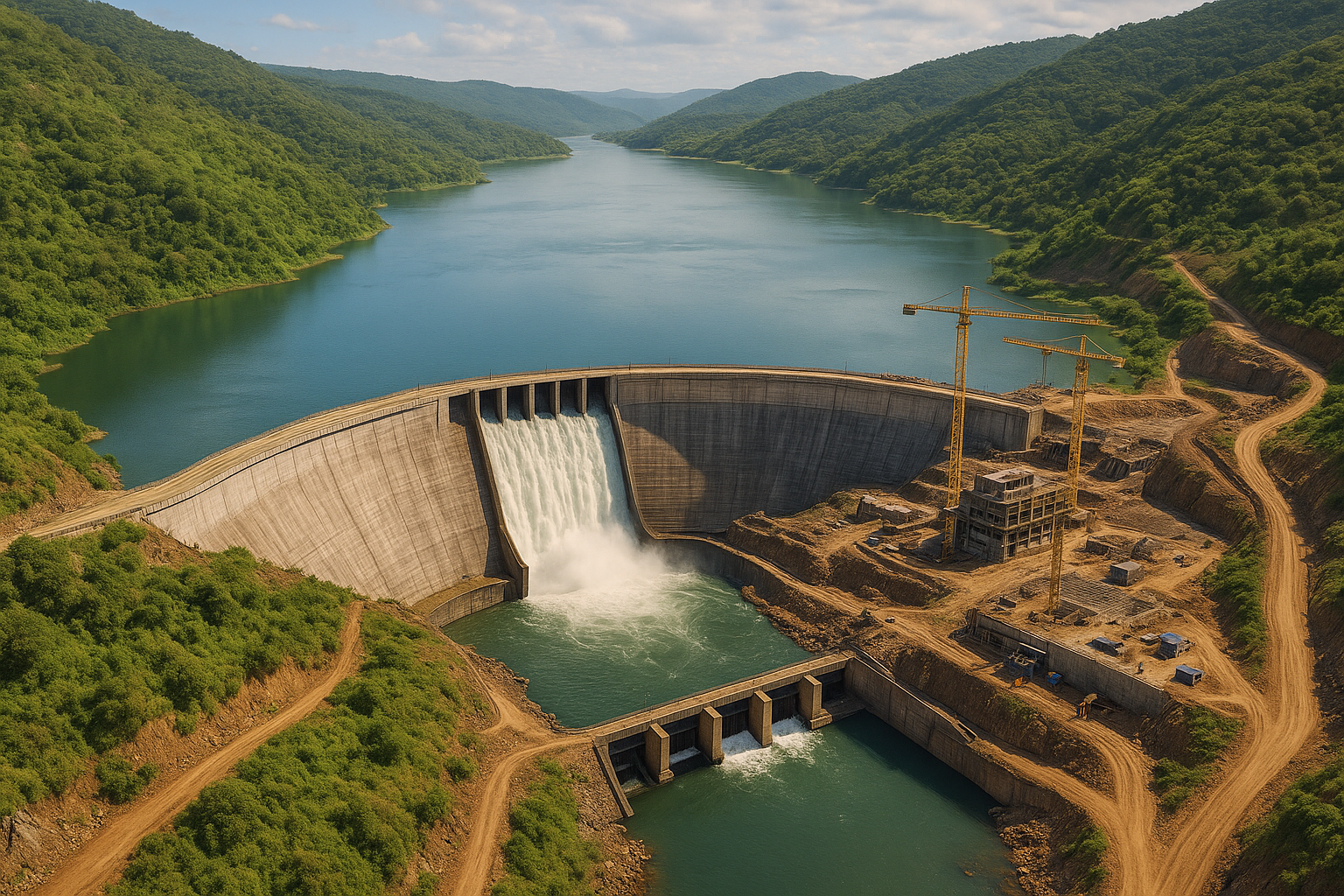
Kenya has revived plans to build the High Grand Falls Dam on the Tana River, a project expected to cost around $2.7–3 billion and deliver 700 megawatts (MW) of electricity to the national grid.
The project, which has been on hold for years due to financing challenges, is now backed by the Kenya Electricity Generating Company (KenGen) and could attract support from Chinese partners. Once complete, it will be the largest hydropower facility in Kenya and the third biggest in East Africa after Ethiopia’s Grand Renaissance Dam (6,450 MW) and Tanzania’s Julius Nyerere Dam (2,115 MW).
According to officials, the dam will be developed under a special purpose vehicle (SPV) to mobilize funding from both public and private investors. In addition to power generation, the project is expected to provide water storage for irrigation and flood control, boosting agriculture in the Tana River basin.
Analysts say the new facility will play a crucial role in securing Kenya’s energy supply as demand continues to rise. It could also enable the country to export electricity to neighbors through the Eastern Africa Power Pool (EAPP), strengthening Kenya’s position in the region’s growing energy market.
However, concerns remain about the project’s high cost, Kenya’s rising public debt, and potential environmental impacts. Conservation groups warn that altering the Tana River could disrupt ecosystems and affect local communities.
Despite these challenges, the revival of the High Grand Falls Dam signals Kenya’s determination to expand renewable energy capacity and remain competitive in East Africa’s hydropower race.