


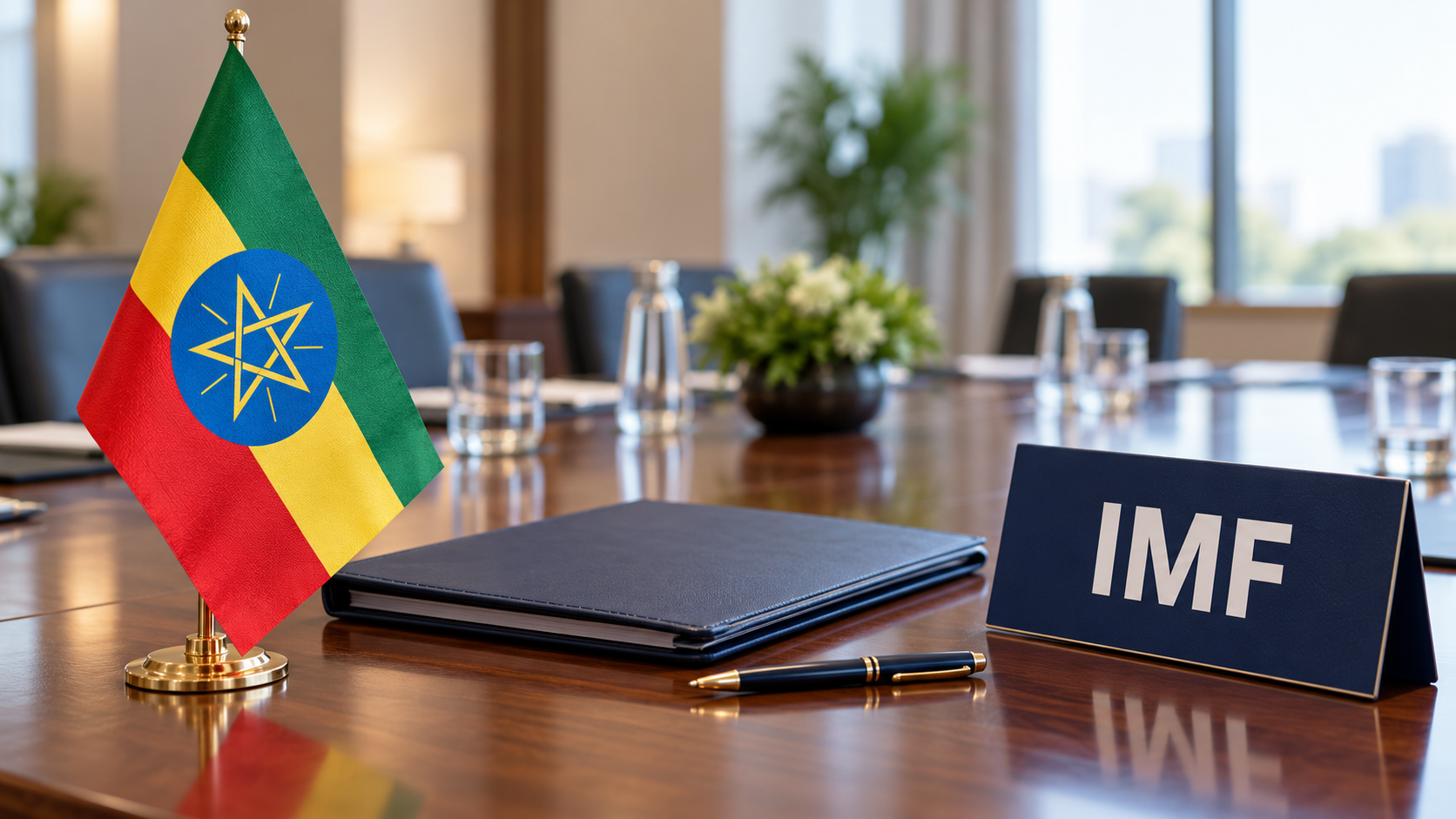
Ethiopia’s next IMF payment hangs in the balance as economic reforms face another critical test.
Ethiopia’s economic reform programme is approaching another important moment, but the next instalment of financial assistance from the International Monetary Fund remains uncertain as the country awaits a fresh assessment of its progress.
For a nation attempting to stabilise its economy, attract investment and manage persistent financial pressures, the timing of international financing matters. Yet the latest indications from the IMF suggest that Ethiopia may have to wait longer before another disbursement can be considered.
The Fund’s forthcoming assessment will examine Ethiopia’s performance against economic targets established for the end of June 2026. Before any decision can be taken, an IMF mission must hold discussions with Ethiopian authorities, evaluate the country’s progress and present its findings to the Fund’s Executive Board.
No firm timetable has been announced for these discussions or for the board’s eventual decision.
This uncertainty should not automatically be interpreted as evidence that Ethiopia has failed to meet its obligations. IMF reviews involve technical assessments and negotiations, and delays do not necessarily indicate that a programme has gone off course.
Nevertheless, the absence of a confirmed payment date raises important questions about the pace of Ethiopia’s economic recovery and the continuing challenges facing its reform programme.
Economic reform comes with difficult choices
Ethiopia has embarked on an ambitious effort to restructure an economy that has long struggled with foreign currency shortages, inflation, debt pressures and restrictions affecting private investment.
The reform agenda seeks to improve economic stability, strengthen the financial system and create conditions for greater private-sector participation.
But economic transformation is rarely painless.
For ordinary Ethiopian households, the success of reform cannot be measured solely by international financial indicators. It must also be judged by the cost of food, the availability of employment, the purchasing power of wages and the ability of businesses to operate without excessive financial uncertainty.
A stronger national economy means little to families whose incomes cannot keep pace with everyday expenses.
The IMF’s involvement provides Ethiopia with access to international financing and technical support, but it also places the country’s economic performance under regular scrutiny.
Such assessments are intended to determine whether agreed policy commitments are being implemented and whether the programme remains consistent with its objectives.
For Ethiopia, the challenge is to maintain international financial confidence while ensuring that reforms deliver tangible improvements for its population.
Why the next IMF review matters
The forthcoming assessment is important because IMF financing is generally released in stages, subject to programme reviews and approval by the Executive Board.
The next review will examine economic performance against targets set for the end of June 2026.
However, the review process has not yet produced an announced timetable for further discussions or a board decision.
Until those steps are completed, the timing of another payment remains uncertain.
It is important to distinguish between an anticipated review window and a guaranteed disbursement deadline. A projected period for assessment does not automatically establish when money will be released.
The IMF mission must first consult Ethiopian officials and assess the available economic information. Its findings will then inform the Executive Board’s consideration of the programme.
For investors, financial institutions and businesses, clarity about this process can be nearly as important as the eventual decision.
Uncertainty over international financing may complicate economic planning, particularly in countries where access to foreign currency remains an important concern.
Ethiopia must look beyond international assistance
Although IMF support can contribute to economic stabilisation, Ethiopia’s long-term development cannot depend indefinitely on external financing.
The country possesses substantial economic resources, including agricultural potential, a large domestic market, expanding energy infrastructure and opportunities for industrial development.
The Grand Ethiopian Renaissance Dam represents one of the most significant examples of Ethiopia’s investment in national infrastructure. Greater electricity availability could support industrial production, improve domestic economic activity and create opportunities for regional energy trade.
Ethiopia’s geographical position also provides opportunities for stronger commercial connections with neighbouring countries.
Improved trade corridors through Djibouti, Somaliland and other regional gateways could help reduce logistical constraints and support the expansion of Ethiopian exports.
Greater regional economic integration would also create opportunities for neighbouring economies to benefit from Ethiopia’s industrial and agricultural development.
These possibilities, however, require consistent economic policies, reliable infrastructure and an environment capable of attracting productive investment.
International financing can support that process, but it cannot replace domestic economic capacity.
A critical moment for Ethiopia’s economic future
The next IMF review will provide another indication of how Ethiopia’s economic programme is progressing, but its outcome should not be anticipated before the necessary assessments have taken place.
There has been no announced finding that Ethiopia has failed to satisfy the relevant programme requirements, nor has a firm date been established for the next payment.
The immediate milestones are clear: discussions between the IMF mission and Ethiopian authorities, an assessment of performance against the agreed targets, and consideration by the Executive Board.
For Ethiopia, the wider challenge extends beyond the release of another instalment of international assistance.
Economic reforms must ultimately create an environment in which businesses can expand, investment can grow and ordinary citizens can experience meaningful improvements in their living standards.
Foreign financing may help stabilise the economy, but sustainable prosperity will depend on Ethiopia’s ability to develop its own productive resources and strengthen its economic relationships across the Horn of Africa.
The real test is not simply whether Ethiopia receives its next IMF payment, but whether the country’s economic transformation can deliver lasting prosperity without permanent dependence on international lenders.