


Horn Daily | October 16, 2026
Rising tensions between Ethiopia and Eritrea have brought renewed attention to a difficult question: even if one side gains the military advantage, how would another war end?
An assessment by The Africa Report warns that a confrontation could become a prolonged conflict, with consequences extending beyond the two countries. The scenarios outlined include fighting concentrated in Tigray, an escalation into Eritrean territory, or wider instability across the Horn of Africa and the Red Sea region.
The distinction between winning battles and securing a lasting political settlement is central. Capturing territory does not necessarily end resistance, resolve competing security concerns or create the conditions for peace. An initial military success could instead leave either government facing a costly and uncertain campaign.
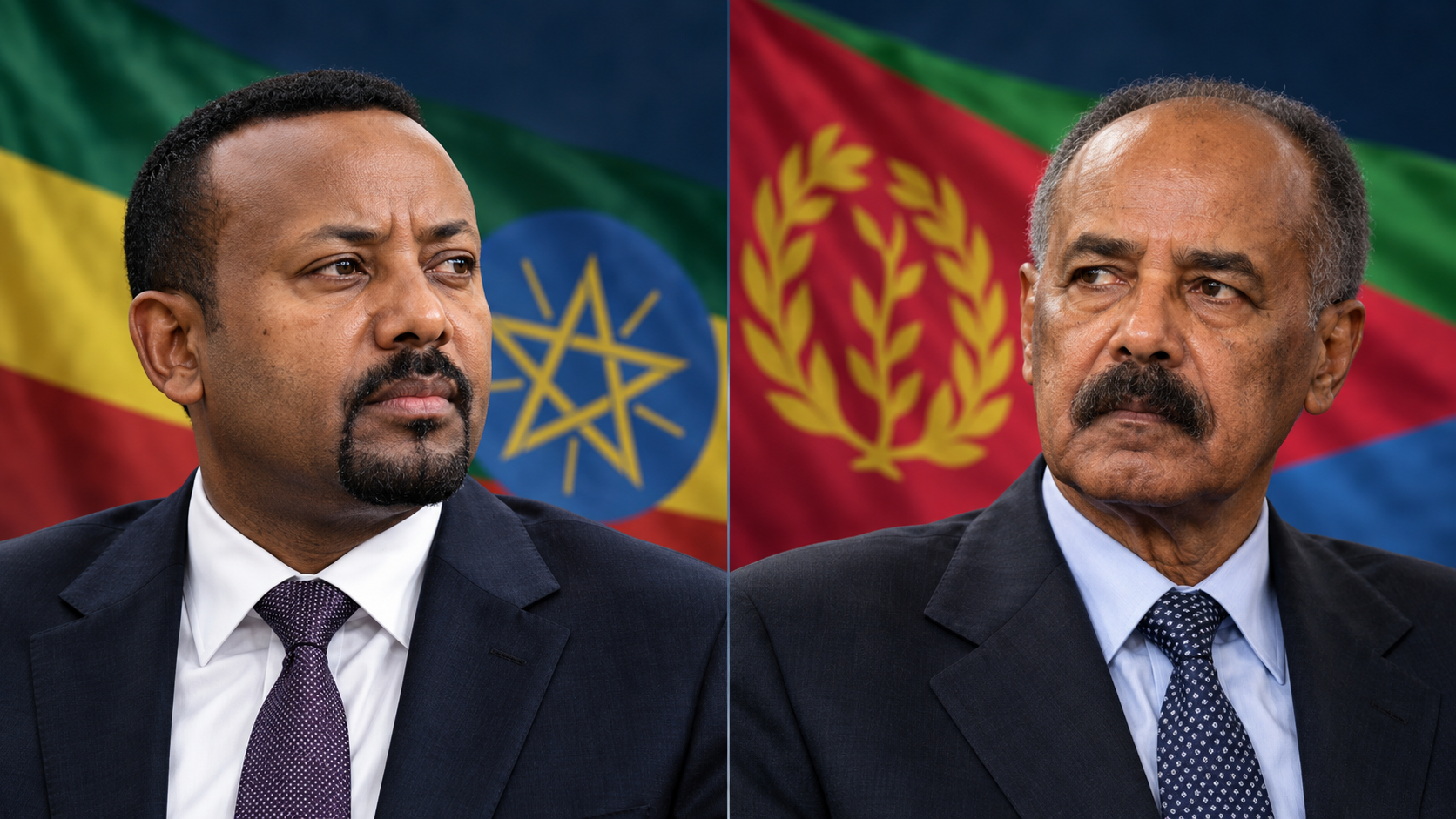
Ethiopian Prime Minister Abiy Ahmed and Eritrean President Isaias Afwerki restored relations through a peace agreement in 2018, following years of hostility after their countries’ 1998–2000 border war. Their deteriorating relationship now threatens that diplomatic achievement.
Renewed fighting in northern Ethiopia has added to the danger. Addis Ababa accuses Eritrean troops of entering Ethiopian territory, while Asmara rejects Ethiopia’s account and accuses its neighbour of threatening war. Claims about military movements remain disputed, with independent verification limited.
The uncertainty makes predictions of a quick or decisive outcome especially difficult. The possible scenarios are warnings about how the crisis could develop, rather than established outcomes.
International diplomatic efforts have focused on preventing further escalation. During an October 14 telephone call with Abiy, US Secretary of State Marco Rubio urged restraint, respect for national sovereignty and dialogue under the 2018 peace framework.
Britain followed on October 15, calling for respect for borders, civilian protection and safe humanitarian access, while supporting African Union efforts to facilitate dialogue.
Neither diplomatic appeal announced a ceasefire or an agreed negotiating process.
For communities already affected by fighting in northern Ethiopia, the immediate stakes are civilian safety and access to essential services. A wider confrontation would place those needs under greater pressure while making a political settlement more difficult to reach.