


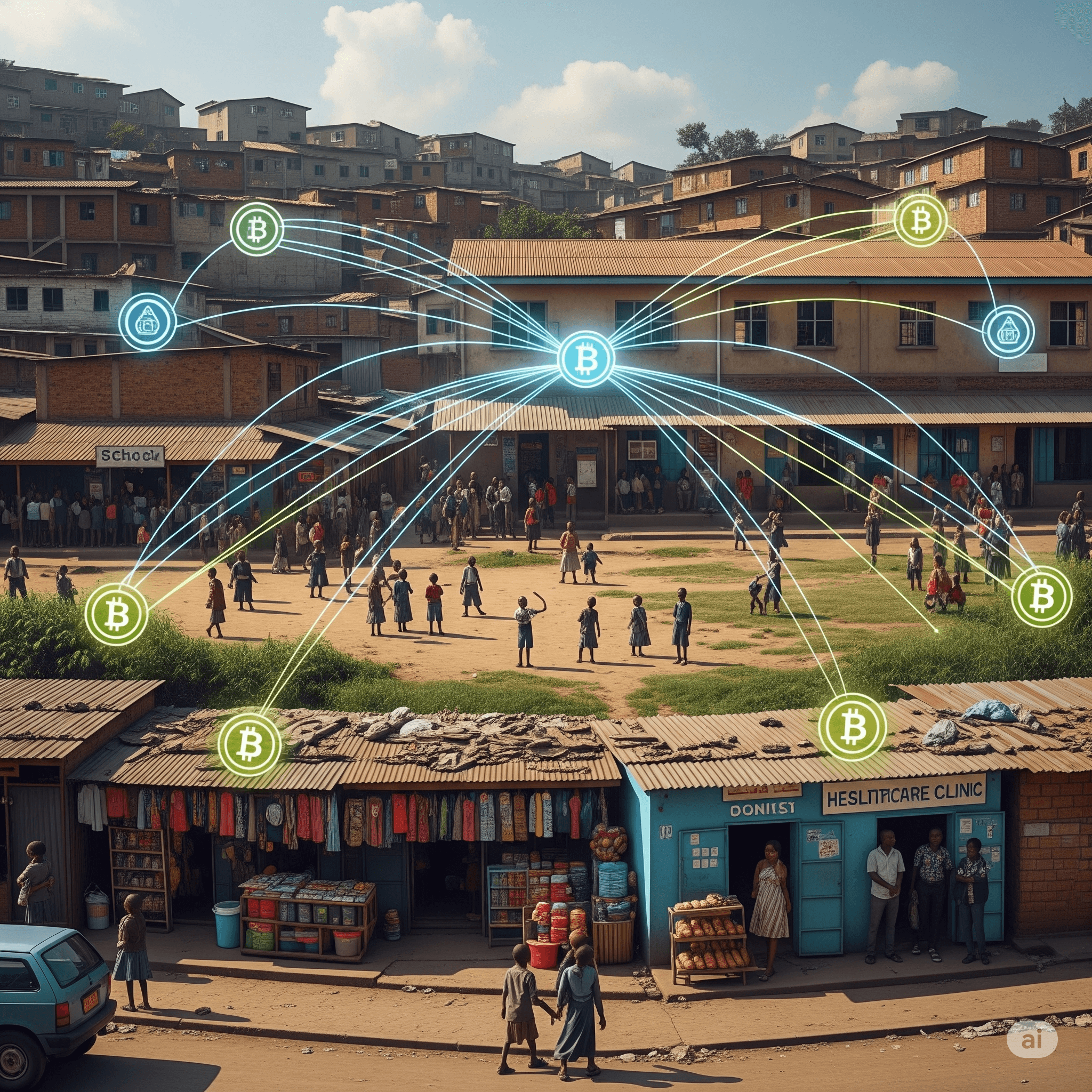
In the sprawling Kibera slum of Nairobi, where over 250,000 residents grapple with poverty and limited access to formal banking, an unlikely financial revolution is taking root. Bitcoin, the world’s most famous cryptocurrency, is gaining traction—not among wealthy investors, but among garbage collectors, street vendors, and motorcycle taxi drivers.
Spearheaded by Kenyan fintech initiative AfriBit Africa, this grassroots adoption of cryptocurrency is reshaping how some of Nairobi’s poorest residents save, transact, and even invest. While proponents hail it as a leap toward financial inclusion, critics warn of the risks of volatility and lack of regulation in an already vulnerable community.
Bitcoin’s Entry Into Kibera
AfriBit Africa, a Nairobi-based fintech nonprofit, introduced bitcoin to Soweto West, a neighborhood in Kibera, in early 2022. The initiative began by paying local garbage collectors in bitcoin for weekly trash cleanups.
“Many people here don’t have bank accounts or official IDs,” said Ronnie Mdawida, co-founder of AfriBit Africa. “Bitcoin removes those barriers—all you need is a smartphone.”
The model was simple: small crypto payments for community work, encouraging peer-to-peer adoption. Today, around 200 residents use bitcoin for daily transactions, savings, and even as a speculative asset.
Why Bitcoin? The Appeal for Kibera’s Residents
1. Lower Transaction Costs Than M-PESA
Kenya’s mobile money system, M-PESA, dominates digital payments but charges fees that add up for low-income users. Bitcoin transactions on the Lightning Network, however, are nearly free.
“M-PESA takes a cut every time I send money,” said Damiano Magak, a 23-year-old garbage collector. “With bitcoin, I keep more of what I earn.”
2. Protection Against Theft
Cash is risky in Kibera, where robberies are common. Storing money in a digital wallet provides security.
“I used to hide cash under my mattress,” said Onesmus Many, 30, another trash collector. “Now, my savings are safe in my phone.”
3. The Hope of Appreciation
Some residents see bitcoin as an investment. Magak and Many now hold 70-80% of their net worth in crypto, betting on long-term price increases.
“When bitcoin rises, it’s like a bonus,” said Dotea Anyim, a vegetable vendor who accepts crypto payments.
Growing Adoption Among Businesses
A small but growing number of businesses in Soweto West now accept bitcoin, including:
-
Vegetable stalls (like Anyim’s, where ~10% of sales are in crypto)
-
Motorcycle taxis (boda-bodas)
-
Repair shops and kiosks
The Lightning Network—a faster, cheaper way to transact with bitcoin—has been key to adoption. AfriBit provides training and wallets to ease the transition.
The Risks: Volatility and Overexposure
Despite enthusiasm, financial experts urge caution.
“Bitcoin can swing 20% in a day,” said Ali Hussein Kassim, chair of Kenya’s FinTech Alliance. “If a garbage collector loses 80% of their savings, recovery is nearly impossible.”
Other concerns include:
-
Lack of consumer protections (unlike regulated banks or M-PESA)
-
Scams and phishing risks (targeting inexperienced users)
-
Regulatory uncertainty (Kenya has cracked down on crypto schemes before)
Mdawida acknowledges the risks but argues that financial exclusion is worse. “We teach people how to manage crypto safely. The alternative is no access at all.”
Broader Implications: Could This Model Spread?
Kibera’s experiment raises bigger questions: Could bitcoin work in other underserved communities across Kenya—or the Horn of Africa?
Potential Benefits:
✔ Cheaper remittances for diaspora families
✔ Financial access for refugees and undocumented groups
✔ A hedge against inflation in unstable economies
Challenges:
✖ Extreme price volatility
✖ Internet and smartphone dependency
✖ Government resistance
A Bold Experiment With High Stakes
Kibera’s bitcoin boom is a testament to grassroots innovation—a community bypassing traditional finance in pursuit of autonomy. But with high rewards come high risks.
As Damiano Magak puts it: “Bitcoin is our chance. Maybe it crashes, maybe it flies. But we’re tired of waiting for the system to help us.”
For now, the world watches to see whether this crypto experiment will lift up Nairobi’s poorest—or leave them more vulnerable than before.